



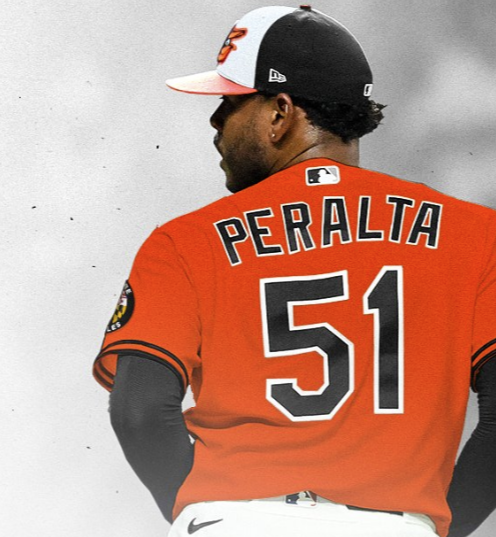
The Orioles didn’t leave much time to debate who would replace Trevor Rogers. Less than 24 hours after the 29-year-old left-hander agreed to a five-year, $120 million deal with the Cubs, the Orioles signed Freddy Peralta for a reported five years and $125 million. It’s the largest contract the Orioles have ever given a pitcher, and what makes this one interesting is how little difference there is between the two deals.
At those prices, I can see the argument for keeping Rogers. He’s a year younger, his fastball was more effective in 2026, and he walked just 5.6% of the batters he faced. He gave the Orioles 169⅔ innings with a 4.03 ERA, and his 3.60 expected ERA suggests he pitched a little better than that. Where Peralta has a clear edge is durability. This was the first time Rogers made 30 starts in a major league season. Peralta has done it four years in a row. Over a five-year deal, that track record matters.
Peralta’s 4.42 ERA also deserves a closer look. After posting a 2.70 ERA in his final season with Milwaukee, he struggled through 22 starts with the Mets, putting up a 4.99 ERA before New York dealt him to Tampa Bay. The Rays had him pitch exclusively from the stretch, and he finished with a 3.25 ERA in 10 starts for them. He was particularly good in September, when he posted a 0.96 ERA, and carried that into October, earning ALCS MVP honors. Given what he did in Milwaukee before the trade and how he responded to a delivery change in Tampa Bay, I’m inclined to think his time with the Mets may have been a blip.
A quick scouting look
Peralta works off a four-seamer that averaged 94.3 mph with good carry. He threw it 53% of the time, though hitters had more success against it in 2026, batting .265 after hitting just .209 against it the year before. The changeup is the pitch I like best. It averaged 87.4 mph with enough arm-side run to take it away from left-handed hitters, who saw nearly three-quarters of the changeups he threw. Hitters averaged just 82 mph off the bat against it. His upper-70s curveball gives him a slower look and drew whiffs on nearly a third of swings. Against right-handers, he’ll also go to a low-80s sweeper.
The number I’ll be watching is Peralta’s strikeout rate. It fell from 28.2% in his last season with the Brewers to 21.4% in 2026, a tick below Rogers at 22.5%. Peralta still did a good job keeping hitters off the barrel, but the strikeouts are what gave him another gear in Milwaukee. I’d give Rogers the edge on how the two pitched over the full season and Peralta the edge on who I’d trust to make 30 starts next year. For another $1 million a year, that’s a reasonable bet for the Orioles. If some of those missing strikeouts come back, they may have upgraded the rotation in the process.


