





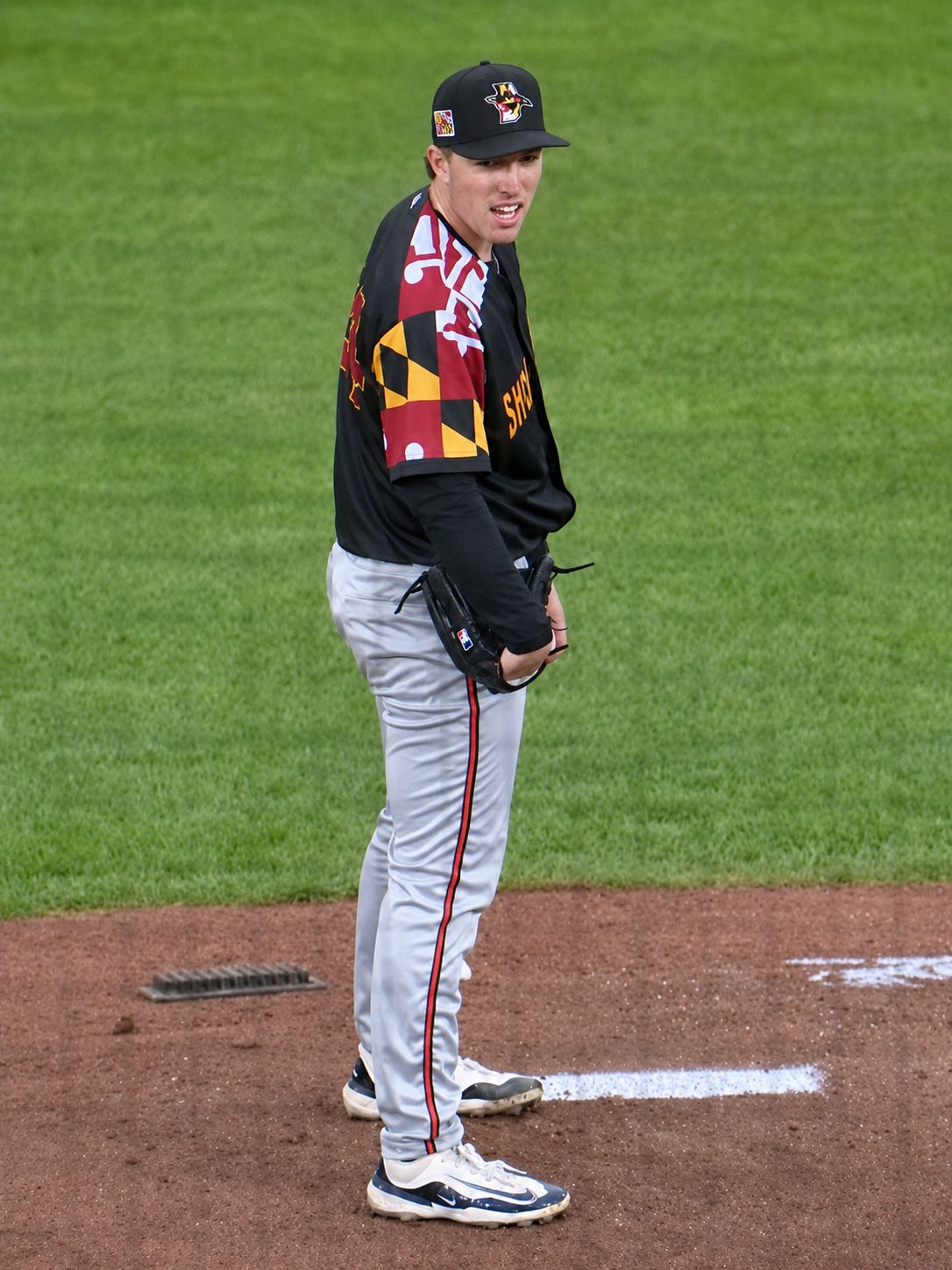
Caden Hunter Scouting Report — Delmarva, May 6 and May 12
Caden Hunter followed up his strong May 6 outing with an even more dominant May 12 start for Delmarva, turning in 4.2 hitless innings with 10 strikeouts, one walk, 16 whiffs, and 43 strikes on 63 pitches.
Two-start snapshot
| Date | IP | H | R | ER | BB | K | Pitches/Strikes | Whiffs | Strike % | Whiff/Pitch % |
|---|---|---|---|---|---|---|---|---|---|---|
| May 6 | 4.0 | 2 | 0 | 0 | 1 | 6 | 66/44 | 15 | 66.7% | 22.7% |
| May 12 | 4.2 | 0 | 0 | 0 | 1 | 10 | 63/43 | 16 | 68.3% | 25.4% |
| Total | 8.2 | 2 | 0 | 0 | 2 | 16 | 129/87 | 31 | 67.4% | 24.0% |
That is a dominant two-start stretch: 8.2 shutout innings, only two hits allowed, 16 strikeouts, two walks, and 31 whiffs. The strike-throwing has been strong, the swing-and-miss has been loud, and the stuff is playing in the zone.
Overall scouting look
The Orioles 6th round pick in the 2025 draft, the 22-year old Hunter is showing the ingredients of a legitimate starter prospect: a 95-96 MPH fastball, a bat-missing slider/sweeper, a usable changeup that is becoming more than just a show-me pitch, and a separate sharper breaking ball with more vertical action.
The biggest development from the May 12 outing is that the fastball completely took over. On May 6, the left-hander showed the full mix and struck hitters out with the fastball, slider, and curveball/sharper breaker. On May 12, he punched out 10 batters, and eight of those strikeouts came on fastballs. The other two came on changeups to right-handed hitters.
That tells you the fastball is not just velocity. It is missing bats and getting called strikes as a putaway pitch.
Fastball: present carrying pitch
Hunter’s fastball sat in the 95-96 MPH range on May 12 and was the clear separator. The pitch generated strikeouts against both left-handed and right-handed hitters, both swinging and looking.
His May 12 fastball strikeouts:
| Batter | Count | Result |
|---|---|---|
| LHB | 1-2 | 96 MPH fastball, swinging K |
| LHB | 0-2 | Fastball, looking K |
| RHB | 2-2 | Fastball, swinging K |
| RHB | 0-2 | Fastball, looking K |
| RHB | 1-2 | Fastball, swinging K |
| LHB | 2-2 | Fastball, looking K |
| LHB | 0-2 | Fastball, swinging K |
| RHB | 3-2 | Fastball, swinging K |
That is a very impressive mix of put-away results. He beat lefties with it. He beat righties with it. He got chases, whiffs, and called strikes. The 3-2 fastball swinging strikeout is especially encouraging because it shows he trusted the pitch in a leverage count and still missed the bat.
This is the biggest takeaway from the two starts: Hunter’s fastball looks like a real weapon at Low-A, not just a pitch he uses to set up secondaries.
Changeup: taking a step forward
The changeup was important on May 6, but on May 12 it showed up as a legitimate finishing pitch. He struck out two right-handed batters with changeups:
| Batter | Count | Result |
|---|---|---|
| RHB | 1-2 | Changeup, swinging K |
| RHB | 0-2 | Changeup down and away, swinging K |
That second one is the key. A changeup down and away to a right-handed hitter for a swing-and-miss strikeout is a real pitch. It means hitters cannot simply gear up for the 95-96 MPH fastball once he gets ahead.
On May 6, the changeup was mostly 86-87 MPH, giving him roughly 8-10 MPH of separation from the fastball. He got whiffs with it, used it for ground-ball contact, and showed willingness to throw it to righties. On May 12, it became a chase and finish pitch.
That is a very positive development. If the changeup continues to miss bats like this, Hunter’s starter profile becomes much more believable.
Slider / sweeper: still a bat-missing weapon
The slider/sweeper was more prominent in the May 6 notes than in the May 12 strikeout summary, but it remains a major part of the scouting report.
On May 6, he used the slider to finish hitters and create ugly swings, especially when he got it low and away. The best example came against a left-handed hitter in the second inning, when he got a swing and miss on a low-and-away sweeper, then later finished the at-bat with another slider low and away for a swinging strikeout.
The pitch has real bat-missing shape, but the command is still developing. He spiked some, yanked some, and left one in the middle of the plate that was hit a long way foul. That is the separator right now between “flashes plus” and “consistent plus.” The movement is there. The execution just needs to tighten.
Curveball / sharper breaker
The curveball or sharper breaker gives Hunter another look. On May 6, he showed one with less horizontal movement and more vertical action, and it produced a swing-and-miss strikeout. That pitch looked different from the sweeper/slider shape, which is important.
If he truly has two breaking-ball shapes — one more horizontal and one more vertical — that gives him a deeper starter’s arsenal. The sharper breaker does not appear as consistent as the fastball/changeup/slider mix yet, but it flashes as a usable fourth pitch.
Command and pitchability
The command is ahead of where you might expect for a lower-level arm with this kind of stuff.
Across the two outings, Hunter threw 67.4% strikes and walked only two batters in 8.2 innings. That is not just raw stuff overwhelming young hitters. He is getting ahead, finishing hitters, and showing confidence to use multiple pitches in strikeout counts.
The May 12 strikeout counts are telling:
| Count | Strikeouts |
|---|---|
| 0-2 | 4 |
| 1-2 | 3 |
| 2-2 | 2 |
| 3-2 | 1 |
Seven of his ten strikeouts came on either 0-2 or 1-2 counts, which shows he was putting hitters away after getting leverage. That is what you want to see from a young starter.
He is still going to need better finish and consistency with the breaking balls. The slider can get noncompetitive. The curveball can get buried. The fastball can miss low or leak to the wrong spot. But he is not wild. He is around the zone, and the stuff is good enough to punish hitters once he gets ahead.
Current pitch grades
| Pitch | Present | Future | Notes |
|---|---|---|---|
| Fastball | 55 | 60 | 95-96, misses bats, put-away weapon on May 12 |
| Slider/Sweeper | 50 | 55 | Real whiff pitch, especially low/away, command still inconsistent |
| Changeup | 50 | 55 | 86-87, good separation, now showing put-away ability vs RHB |
| Curve/Vertical breaker | 45 | 50 | Flashes distinct shape, needs consistency |
| Command | 40 | 50 | Throws strikes, limits walks, still refining location quality |
| Overall | 45 | 50/55 | Starter traits with mid-rotation upside if command/pitch separation continue |
Projection
Hunter is starting to look like more than just an interesting Low-A arm. The fastball velocity is real, the fastball is getting whiffs, the changeup is taking a step forward, and the slider/sweeper gives him a legitimate breaking-ball weapon.
The best part is that this does not look like a one-pitch profile. On May 6, he showed the full arsenal and got strikeouts with the fastball, slider, and curveball/sharper breaker. On May 12, the fastball was so dominant that he barely needed to lean on the breaking ball for strikeouts, while the changeup gave him a second put-away pitch.
That is a strong developmental sign.
The question now is whether he can keep holding 95-96 MPH deeper into starts and whether the breaking-ball command becomes more consistent. If the slider command tightens and the changeup continues to play like it did on May 12, Hunter has a legitimate starter’s mix.
Final takeaway
Caden Hunter has put together back-to-back starts that should get attention.
This was not just a good stat line. The underlying indicators are loud: 31 whiffs in 129 pitches, a nearly 24% whiff-per-pitch rate, only two walks, and strikeouts coming from multiple pitch types across the two outings.
The May 12 start was especially encouraging because the fastball looked dominant. When a Low-A starter can sit 95-96, throw strikes, miss bats with the fastball, and also finish right-handed hitters with a changeup, that is a real prospect look.
Hunter still needs refinement, especially with the breaking-ball command, but the foundation is very interesting. Right now, he looks like a rising arm with a starter’s arsenal and legitimate bat-missing upside that probably needs to be challenged in High-A ball after just 15 professional innings.